
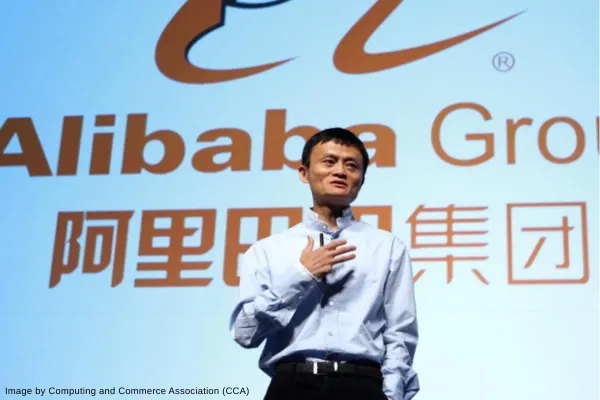
From Rejected Teacher to E‑Commerce Titan
By Sarah Williams
When Jack Ma gathered 17 friends in his Hangzhou apartment in 1999, he wasn’t a tech genius. He wasn’t an engineer. He had failed multiple school exams, been rejected from dozens of jobs (including KFC), and earned just $12 a month as a teacher. What he didhave was vision, and an instinct that the internet would transform global trade.
That instinct became Alibaba, a platform designed to help small Chinese businesses sell to the world. Two decades later, Alibaba is a global giant in ecommerce, payments, cloud computing, and logistics, serving over one billion customers. But its beginning was anything but smooth.
From Apartment Startup to Global Marketplace
Before launching Alibaba, Jack Ma founded China Pages, one of China’s earliest online directories. It struggled; China’s internet penetration was low, and few businesses understood digital tools. But this experience gave him two crucial insights:
Chinese manufacturers had world-class products.
They lacked access to global buyers.
In 1999, Ma and his small team launched Alibaba.com, a B2B platform for small manufacturers to reach international customers. With early investments from Goldman Sachs (US$5M) and SoftBank (US$20M), Alibaba survived the dot-com crash and pushed forward.
By 2003, when eBay entered China, many expected Alibaba to lose. Instead, Ma launched Taobao, a free-to-use consumer marketplace. Paired with Alipay, an escrow-style payment system designed to solve trust issues in online transactions, Taobao beat eBay and became China’s dominant e-commerce marketplace.
Within a decade, Alibaba was no longer just a platform; it was an ecosystem.
Challenges They Turned into Catalysts
Low Trust in Online Payments
In the early 2000s in China, credit card use was low, and online fraud was high. Instead of waiting for banks to solve it, Alibaba built Alipay, releasing funds only when buyers confirmed delivery, a move that unlocked mass e-commerce adoption.
Competition with eBay
eBay entered China with enormous capital and global dominance. Alibaba won by understanding local behavior, offering free listings, and building community-driven features tailored to Chinese consumers.
Poor Logistics Infrastructure
China’s delivery networks were fragmented. Alibaba built Cainiao, a data-driven logistics platform that unified carriers and optimized deliveries for millions of sellers.
Smart Moves That Drove Growth
Building an Ecosystem, not a Store
Alibaba never held inventory. Instead, it empowered millions of sellers. This asset-light model helped it scale faster than Western rivals.
Investing Early in Cloud Computing
Alibaba Cloud launched in 2009, long before many Chinese companies saw the value. Today, it is one of the world’s largest cloud service providers, powering e-commerce, finance, logistics, AI, and smart cities.
Expanding Into Every Corner of Digital Commerce
From Tmall to AliExpress, Hema supermarkets, entertainment, and fintech, Alibaba built a network of interconnected businesses that feed each other through data, payments, and shared logistics.
Storytelling and Purpose
Jack Ma positioned Alibaba as a company that helps small businesses grow. This mission attracted investors, employees, and global supporters who believed in an internet that empowers the “little guy.”
Sweet Results
In 2014, Alibaba listed on the NYSE and raised US$25 billion, the largest IPO ever at the time.
Explosive Revenue Growth
Alibaba’s revenue rose from:
US$68M in 2004
US$1.3B in 2010
US$8.4B in 2014
US$72B in 2020
Over US$130B by 2023
A more than 1,900× increase in under 20 years.
Through Taobao, Tmall, Alipay, and AliExpress, Alibaba became central to how consumers in China and across the world shop, pay, and access services.
Alibaba now supports millions of businesses across manufacturing, retail, logistics, cloud, finance, and media, shaping the digital economies of Asia and beyond.
The Big Lesson
Innovation is about solving real problems at scale.
Alibaba succeeded because it:
Identified barriers facing small businesses
Built trust where none existed
Created ecosystems instead of standalone products
Bet boldly on the future of digital infrastructure
Jack Ma’s journey shows that anyone, even a struggling teacher with no technical background, can build something world-changing with vision, persistence, and a deep belief in solving problems others overlook.
Sources:


