AI Summer Series
Clear thinking for leaders navigating AI and business growth.

Amanda Reid
CEO at BERL

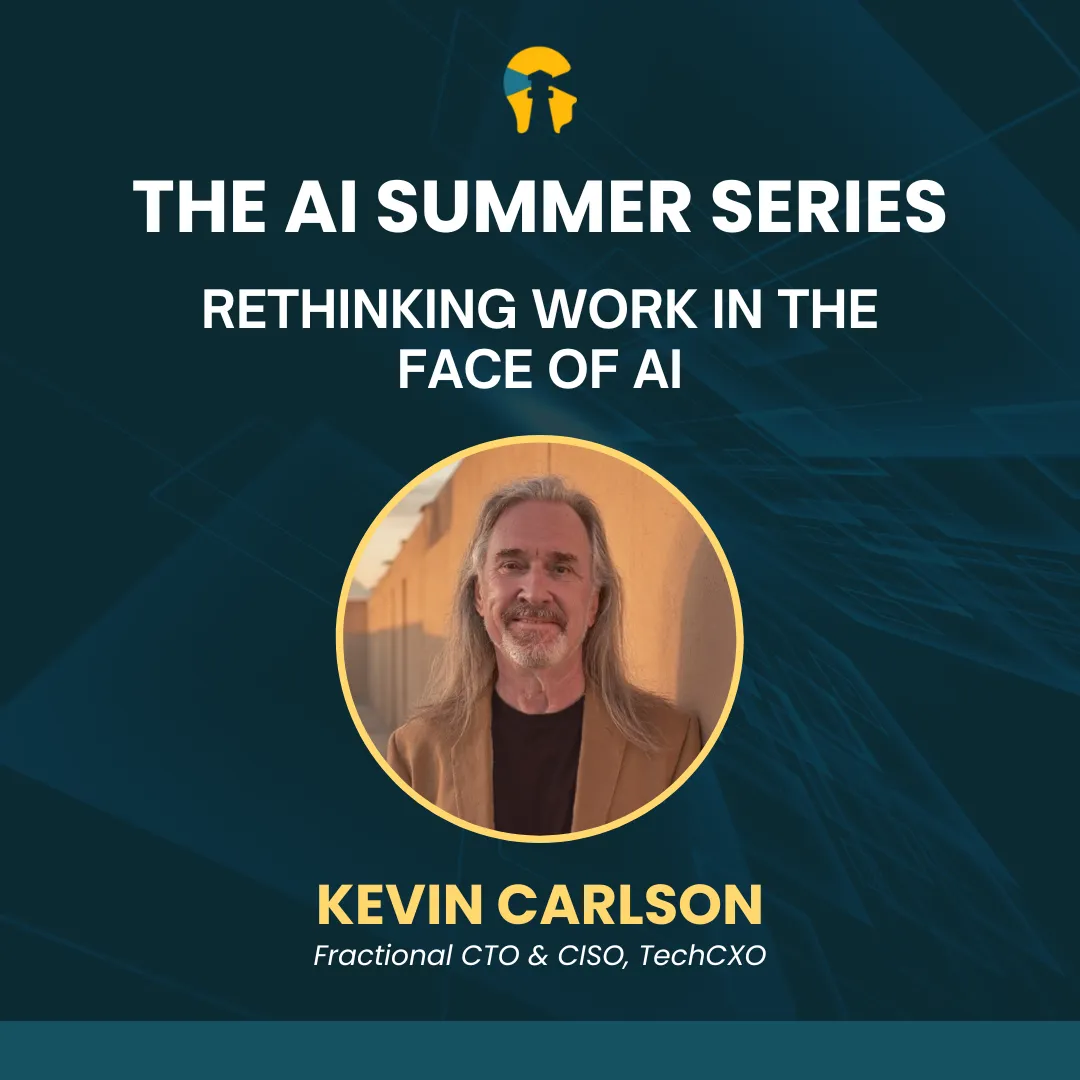
KEVIN CARLSON
Fractional CTO & CISO, TechCXO
Kevin Carlson helps companies and people navigate what’s next, whether that means launching an AI initiative, transforming a tech stack, or building the kind of leadership team that can thrive in uncertainty. He has been in the tech world since the 1980’s, and since 2018, has served as a Fractional CTO and CISO, coached leaders through inflection points, and helped companies, from startups to enterprise, turn vision into execution. He also serves on the board of a SaaS security services company.
💡Key Takeaways from Kevin's Interview
Executive AI Fluency
Carlson defines AI fluency for non-technical leaders through two primary lenses: privacy/security and distinguishing hype from reality.
• Security Practices: He advises that while commercial models like ChatGPT allow users to opt out of data training, leaders should still practice "digital hygiene" by deleting documents once analysis is complete to mitigate risks from potential third-party data leaks.
• Managing Expectations: Leaders often overestimate AI's ability to replace entire teams or complete year-long projects in 24 hours. Conversely, they underestimate its ability to handle complex manual tasks, such as organizing local file systems or executing scripts.
AI Positive vs. AI Negative Leadership
Carlson distinguishes between two leadership mindsets regarding AI adoption:
• AI Positive Leadership: Focuses on upskilling and educating teams to use AI for increased efficiency and accuracy. This approach retains "cultural awareness" and business knowledge that would otherwise be lost.
• AI Negative Leadership: Views AI primarily as a tool to reduce headcount. Carlson warns this leads to slower adoption due to employee fear and can backfire; he cites Klarna as an example of a company that cut staff only to have to rehire them when AI could not fully manage customer support.
The Evolving Nature of Work and Roles
The interview highlights a significant shift in professional requirements across several fields:
• Software Development: Engineers must move toward a "product mindset," focusing on architecture, design, and writing detailed requirements rather than just syntax. Carlson expresses concern for junior developers, who may struggle because they lack the high-level experience necessary to properly "guide" AI tools.
• Blended Roles: Future roles will likely merge skills that were previously separate, such as combining development, product management, and QA.
• Shift from Tedium to Innovation: In fields like finance, AI can handle spreadsheet modeling, allowing professionals to use their intuition to analyze "if the numbers feel right" rather than being lost in data entry.
Hiring and Education
Carlson argues that hiring for specific technical skills is becoming obsolete. Instead, organizations should prioritize:
• Aptitude and Curiosity: The ability and desire to learn are more valuable than a static list of skills.
• Fluidity: Employees must be able to move between different roles and "wear different hats" as AI changes the business landscape.
• Reduced Emphasis on Formal Education: Because AI can provide both breadth and depth of knowledge, formal degrees or bootcamps may become less critical than a candidate's ability to apply AI-driven learning to business problems.
Governance and Implementation (The AIM Model)
To navigate AI adoption safely, Carlson recommends every company establish a formal AI policy and an approval process to avoid "shadow AI". He introduces the AI Implementation Model (AIM) to help businesses choose a strategy based on their needs:
Level 1. Commercial Tools: Low cost and quick ROI, but offers no competitive differentiation.
Level 2. Customized LLMs: Using models like Llama trained on proprietary data; provides better differentiation but is more expensive to deploy.
Level 3. Proprietary Models: Custom-built models that offer complete differentiation but require massive investment and long development timelines.
Finally, Carlson emphasizes that any custom AI implementation requires a robust AI Ops or ML Ops pipeline to continually retrain the model on new data, ensuring it does not lose applicability over time.


Week One Speakers: (click the image to watch the interview)
Week Two Speakers: (released 9 February 2026)
Week Three Speakers: (release 16 February 2026)
Week Four Speakers: (release 23 February 2026)